One of the most frequently asked questions during Ramadan is whether using e-cigarettes invalidates the fast. Is vaping treated the same as smoking traditional cigarettes? And does it fall under the same religious ruling?
The short answer is yes.
From an Islamic jurisprudential perspective, fasting means abstaining intentionally from anything that invalidates the fast, from dawn until sunset. Any substance that deliberately enters the body cavity of a fasting person is considered to break the fast.
In the case of smoking, smoke enters the body through inhalation. Similarly, when using e-cigarettes, vapor is inhaled into the lungs. Additionally, nicotine is absorbed into the bloodstream and satisfies a specific physiological craving. Based on this reasoning, many scholars classify vaping in the same category as smoking during fasting hours.
Clarifying the Context: Vaping and Harm Reduction

Before addressing the ruling further, it is important to clarify a key point: electronic cigarettes are widely considered a lower-risk alternative to traditional tobacco cigarettes and shisha, which involve combustion and expose users to thousands of toxic and carcinogenic chemicals estimated at around 7,000 substances.
In 2015, Public Health England (PHE) officially stated that e-cigarettes are at least 95% less harmful than smoking. While this figure has been debated and contextualized in subsequent years, the general scientific consensus remains that vaping eliminates combustion and therefore significantly reduces exposure to many of the most harmful byproducts found in cigarette smoke.
E-cigarettes replicate aspects of the smoking experience—such as inhalation and throat sensation—which can make quitting combustible tobacco easier for some smokers.
The issue of fasting, however, is not solely medical but religious. In a published response by Emarat Al Youm, the Grand Mufti and Director of the Fatwa Department at Dubai’s Islamic Affairs and Charitable Activities Department, Sheikh Dr. Ahmed Abdulaziz Al Haddad, addressed the question directly. He stated that electronic cigarettes invalidate the fast because the vapor enters the body through inhalation, similar to conventional cigarette smoke, and therefore falls under the same ruling.
Although scholarly opinions may vary across different schools of thought, many religious authorities apply the same principle to both smoking and vaping during fasting hours.
Beyond legal classifications, fasting carries a broader spiritual meaning: refraining from desires and exercising self-control. From this perspective, resisting nicotine cravings (whether from cigarettes or e-cigarettes) aligns with the deeper purpose of Ramadan.
Practical Advice for Vapers During Fasting Hours
Since you will not be using your device during the day, proper care and storage become especially important during Ramadan.
1. Turn Off and Store Devices Safely
Switch off your vape devices during fasting hours and keep them away from heat sources. Avoid leaving them under direct sunlight, inside cars, or in enclosed spaces exposed to high temperatures. Excessive heat can negatively affect batteries and, in extreme cases, lead to battery failure.
2. Store E-Liquids Properly
Because consumption typically decreases during Ramadan, you may find yourself with more e-liquid than usual. Store bottles in cool, dry places away from direct light to prevent degradation and preserve quality.
3. Monitor Nicotine Levels
Abstaining from nicotine during fasting hours can be beneficial, but some individuals may experience stronger cravings after iftar. If necessary, some users temporarily adjust nicotine strength after breaking the fast to avoid relapse into smoking. The key objective should always remain preventing a return to combustible tobacco use.
4. Use the Time for Maintenance
Ramadan can be a good opportunity to perform deep cleaning of tanks, replace coils, and maintain your device. Proper maintenance ensures a better experience after sunset.
Smoking vs. Vaping During Ramadan
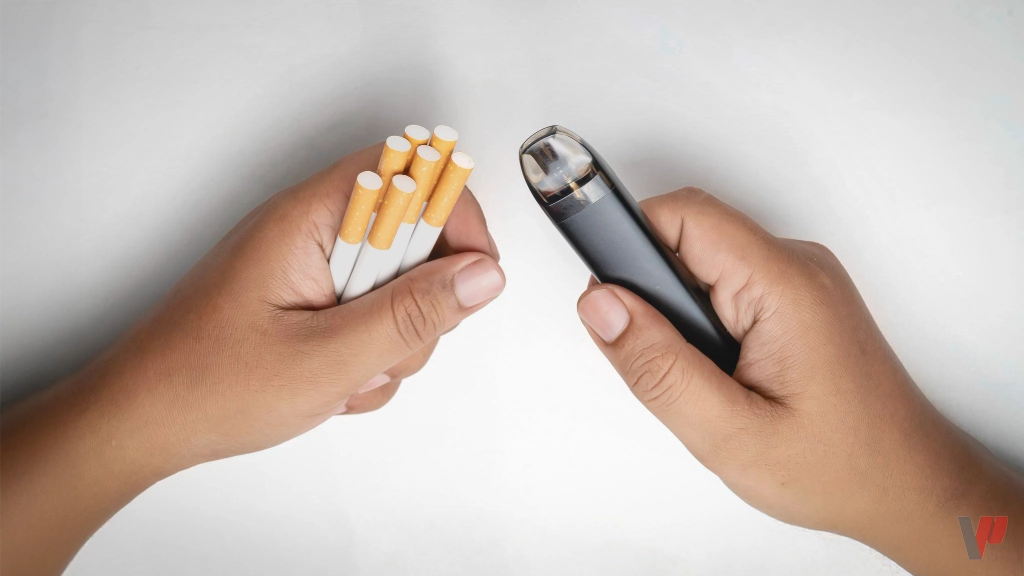
Smokers often face particular challenges during Ramadan due to physical dependence on nicotine. After long hours of abstinence, some may feel an intense urge to smoke immediately after iftar, sometimes leading to higher cigarette consumption within a short period. This pattern can reinforce nicotine dependence and strengthen the psychological link between smoking and stress relief.
Traditional cigarettes continue to expose users to toxic substances produced by combustion, including tar and carbon monoxide—both associated with well-documented respiratory and cardiovascular risks. Furthermore, cigarettes do not allow precise control over nicotine intake, making gradual reduction more difficult.
By contrast, e-cigarettes allow users to select varying nicotine strengths, offering greater flexibility in managing consumption. The absence of combustion significantly reduces exposure to many harmful chemicals found in cigarette smoke.
From a behavioral standpoint, some smokers find that vaping helps manage intense cravings after iftar without immediately returning to combustible cigarettes—particularly when used as part of a structured reduction strategy rather than as a permanent replacement.
Which Approach Is More Effective for Quitting?
There is no universal answer. The most effective quitting method depends on the individual’s level of nicotine dependence, motivation, and readiness to change long-standing habits.
Abrupt cessation may work for individuals with strong determination and a lower level of dependence. However, for heavily dependent smokers, sudden quitting can be extremely challenging and may increase the likelihood of relapse.
For some smokers, transitioning to e-cigarettes can serve as a harm reduction strategy—reducing exposure to combustion-related toxins while gradually lowering nicotine levels over time. However, this approach is most effective when vaping is used as a step toward complete cessation, not as a permanent substitute.
It is essential to distinguish between harm reduction and full cessation. Harm reduction focuses on lowering health risks associated with smoking, whereas public health goals ultimately prioritize complete freedom from nicotine dependence.
In the end, the most effective choice is the one that genuinely helps the individual reduce nicotine consumption progressively and break long-term behavioral patterns—whether through immediate cessation or a structured transitional approach.