

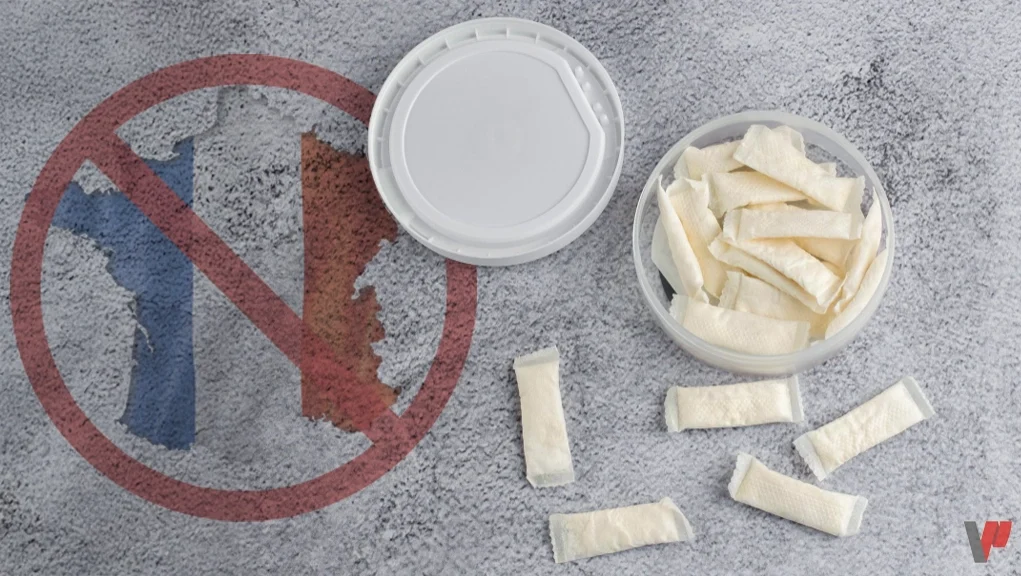
Even if each country decides how to handle public health, EU law has long insisted that goods legally sold in one country must be able to cross borders. This changed under France’s new rule, as it makes a regulated product illegal as soon as it sets foot in the country.
France has not only banned the sale of nicotine pouches but also made it a crime to possess or use them. As a result, a product legally purchased in another EU country becomes illegal upon import into France. This has caught the attention of Brussels, where Members of the European Parliament have asked the European Commission to determine whether the policy breaches EU law, especially the rule on the free movement of goods. Brussels has to determine if this infringes on public health and/or is a threat to the single market.This is not simply a technicality; it raises deeper questions about how the EU functions. Even if each country decides how to handle public health, EU law has long insisted that goods legally sold in one country must be able to cross borders. This changed under France’s new rule, as it makes a regulated product illegal as soon as it sets foot in the country.
The French say they need the ban to protect children from nicotine. But critics point out that cigarettes remain so easily available, while these alternatives to smoking that do not involve heating tobacco have been banned. This irony is similar to what Robert Beaglehole and Ruth Bonita, two former leaders of the global health community, have written about how nicotine and smoking are handled, referring to the wrong notion that it’s nicotine itself and not burning tobacco that accounts for most smoking-related diseases.
Sweden shows that the opposite strategy yields results
Sweden is, of course, a prime example of how a risk-based approach can work. Because people there can easily get snus and nicotine pouches, daily smoking rates have dropped to below 5 percent, much lower than the EU average. And naturally, as a result, lung cancer rates are also lower. These figures are consistent with the World Health Organization’s tobacco control guidelines, which include harm reduction as good policy (even though it is generally not followed). Still, some European countries are moving in the opposite direction. Spain, for instance, isn’t banning nicotine pouches but wants to sell them only in licensed tobacco shops. Both main political parties support this plan to limit youth access and improve oversight. While these goals make sense, the bigger picture raises old concerns.
Experiences with strict regulations worldwide are revealing. Dutch government research found that many vape users get their products from informal or illegal sources. In France, where the rules are very strict, illegal trade accounts for over 40 percent of use. This fits with global patterns when legal access is limited: demand doesn’t go away—it just moves to other channels.
This is not just a theory. Evidence in Nature Health and other journals shows that demand-focused tobacco control strategies that also restrict less harmful measures are often ineffective, and can end up supporting the products that are actually most damaging. Countries that have incorporated vaping as a part of their smoking cessation plans, while setting safeguards to protect minors, such as New Zealand, have consequently experienced one of the steepest declines in smoking rates globally.
In Europe, this debate has also become philosophical.
There is now a clear divide between those who support an “abstinence-first” approach and those who prefer a practical, results-focused method. Tobacco harm reduction expert Clive Bates calls this the “rise of the pragmatists,” referring to those who judge policies by their real-world results rather than ideology.
New platform to share real experiences of smoking cessation
As policies change, a new initiative is focusing on the most important group: consumers. Starting in 2026, the THR Global platform will share real-life stories from smokers who switched to lower-risk alternatives. These stories will offer more detail than what is usually found in official policy talks, covering quitting, the products used, and the difficulties encountered before and after switching.
Many report that switching to smokeless products has helped them quit smoking after many years of addiction. Others report better health, improved fitness, and a higher quality of life. These experiences support a key idea in harm reduction: policy should consider not only statistics, but also real human behavior and experience.
Yet this perspective is rarely included in current regulatory discussions, where decisions are usually made without real input from consumers. As Kurt Yeo, founder of THR Global, put it: “It’s not that there is no evidence — it’s how to communicate it and whether movers and shakers want to consider the evidence.”
Putting it into perspective
The stakes are high. Even with effective tobacco control measures, smoking is still one of the leading preventable causes of death in Europe, causing one million deaths each year. Progress in tobacco control and quitting smoking has slowed since about 2000, especially among older people and heavy smokers. Many continue to smoke because they don’t have easy or acceptable alternatives.
This is the reason why policies should be risk-relative. Again, the incentives are muddied if safer products aren’t easier to purchase than cigarettes. It is not just about messaging but also how these products are positioned and priced. The results are easy to predict when switching is more difficult than simply continuing to smoke. Amid contradictory signals, France’s pouch ban, Spain’s trade limits, and wider EU rules are major red flags.
As Europe moves forward, the challenge will be to protect young people, keep the market fair, and ensure adults have access—all while demonstrating both evidence and real-life experience. If not, the system could become fragmented, with ambitious policies that don’t work in practice and leave those most affected without a voice.





EU regulatory landscape is becoming complicated. Each country goes its own way. From Thailand’s perspective, we follow developments closely. For authentic vape products with reliable shipping in Thailand, I source from Goatvape Thailand (goatvapethai.com).