South America has made substantial progress against smoking, but its approach to safer nicotine alternatives remains fragmented and frequently contradictory. Governments have raised tobacco taxes, introduced graphic warnings and expanded smoke-free laws, yet several continue to prohibit vaping and heated-tobacco products while leaving cigarettes widely available.
Across the wider Americas, adult tobacco-use prevalence fell from 21.3% in 2010 to 16.6% in 2022—a 22.1% relative reduction—according to the Pan American Health Organization. South America also became the first WHO subregion in which every country established national laws requiring smoke-free indoor public places and workplaces.
Progress, however, has definitely been uneven. In 2023, Chile reported a tobacco-use prevalence of 27.2% among individuals aged 15 and older, while Brazil has seen its smoking rate drop to about 9%. These variations highlight that you can’t evaluate regional tobacco control just by looking at a single number. They also raise a larger question: should tobacco control focus solely on eliminating nicotine, or should it offer adults lower-risk ways of consuming it?
A divided market for nicotine alternatives
Like other regions of the world, South America does not have a unified regulatory model. Brazil continues to prohibit the manufacture, importation, advertising and sale of electronic cigarettes, under rules reaffirmed by ANVISA in 2024. Similar prohibitions or severe restrictions have historically applied in Argentina, Uruguay, Venezuela and several neighbouring markets.
Other countries have pursued regulation rather than outright prohibition, creating a legal but controlled market for products such as vapes, heated tobacco and nicotine pouches. Regulation may include age limits, health warnings, advertising restrictions, product registration and taxation.
Earlier this year, Argentina signalled a potentially important change by establishing a national registry covering tobacco and nicotine products in May 2026. Its listed categories include e-cigarette devices and liquids, heated-tobacco devices and sticks, and nicotine pouches. The resolution explicitly addresses traceability, product safety, and the reduction of smoking-related harm. The registry does not, by itself, resolve every legal and implementation question, but it points towards supervised regulation rather than an invisible market.
Brazil’s banned but very visible vape market
One of the largest discoveries occurred at the Port of Santos in December 2024. Customs officials inspected two containers declared as carrying toys, tools, computer accessories, automotive parts and musical instruments. Inside were approximately 450,000 vaping devices and refills containing liquids labelled with nicotine concentrations of 2% and 5%. The shipment was valued by authorities at around R$45 million.
The seizure illustrates how prohibition changes a product’s recorded identity before it reaches consumers. Devices may be declared as batteries, electronics or unrelated merchandise, leaving regulators unable to verify their manufacturer, ingredients, nicotine strength or route into the country.
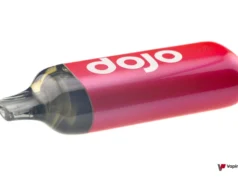
Brands such as Elfbar, Lost Mary, Ignite and Vaporesso appear on informal Brazilian sales channels, but a familiar packaging design provides no guarantee of authenticity. A device may be a genuine product imported illegally, a counterfeit or an unverified production batch. Prohibition removes the traceability that could distinguish between them.
Old smuggling routes accommodate new products
The illegal vape trade did not develop from scratch. It has adapted routes associated with cigarette trafficking, especially around the Triple Frontier linking Brazil, Paraguay and Argentina. For decades, this area has supported networks of transporters, warehouses, intermediaries and informal border workers. Paraguay developed into a major cigarette producer and distribution centre, while illicit products moved into Brazil by road, river and across the area surrounding Lake Itaipu.
Electronic cigarettes can use the same infrastructure but are often easier to conceal. Devices can be divided into components, packaged with consumer goods, and sold through decentralised online networks. An illicit transaction may therefore resemble ordinary e-commerce by the time it reaches the buyer.
This trade also has a social dimension. Border communities may depend on informal commerce where formal employment is limited. Drivers, couriers and loaders often assume the greatest legal risk while receiving relatively little of the profit. Stronger border enforcement alone is therefore unlikely to eliminate a market embedded in local livelihoods and sustained by consumer demand.
Regulating increases accountability and safety
Regulation would not abolish smuggling, but it could redirect part of the market into accountable businesses while allowing authorities to concentrate resources on genuinely non-compliant suppliers. Nicotine pouches, vapes, and heated-tobacco products aren’t without their dangers, so it’s crucial to have strict controls on youth access. Still, combustible cigarettes pose a uniquely high risk because burning tobacco creates the toxic mix that leads to most smoking-related cancers, heart diseases, and respiratory problems.
South America now faces a choice between prohibition and proportionate regulation. Its experience shows that banning alternatives does not necessarily make them disappear. Instead, products may lose their names in customs documents, their traceability in warehouses and their safety assurances online.
A progressive strategy would retain strong cigarette controls while regulating alternatives according to their actual risks. That means enforcing adult-only sales, controlling ingredients and nicotine strength, restricting youth-oriented marketing, collecting market data and taxing combustion most heavily. Such a framework would protect young people without denying adult smokers credible routes away from cigarettes.