Vaping Seen Above All as a Public Health Risk
Ireland is continuing its crusade against nicotine. On October 6, 2026, the new budget presented by Finance Minister Simon Harris introduced a €1 increase in cigarette taxation. The rise, which has already taken effect, has pushed the price of a pack to the symbolic €20 threshold.
At the same time, it was announced that the tax on e-liquids will increase from €0.50/ml to €0.70/ml on January 1, 2027. This 40% increase is expected to push the price of a 10 ml bottle above €12, nearly €9 of which will come from tax and VAT.
In Ireland, the e-liquid tax came into force on November 1, 2025. That same year, according to Healthy Ireland, 17% of the population smoked, a figure that has remained stable since 2019 and is far from the target of below 5% that the government had set for 2025.
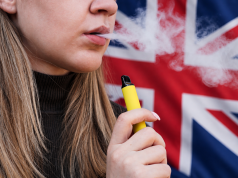
Despite scientific evidence showing that e-cigarettes are an effective smoking cessation tool, the country places this role in the background and approaches vaping primarily as a risk to young people.
In its notification of the tax to the European Union, Ireland justified the measure by stating: “Although e-cigarettes may be used as a means of smoking cessation in some cases, their popularity among young people is a key public health concern, particularly because of the gateway effect these products may have in relation to initiation into other nicotine- or tobacco-containing products.” An argument challenged by numerous studies.
In the United States, youth smoking declined as vaping increased, with the gateway effect appearing negligible at best at the population level.1 Adolescents who started with e-cigarettes may even be less likely to become smokers than others with similar risk profiles,2 while one systematic review concluded that a diversion effect was the most likely mechanism.3
Ireland itself may provide an illustration of this: according to the OECD, its 15-year-olds have the lowest smoking rate in the European Union.4 In 2022, only 7% had smoked during the previous month, compared with an EU average of 17%. At the same time, 18% of Irish 15-year-olds had vaped during the previous 30 days.5
Sources
1 Levy, D. T., Warner, K. E., Cummings, K. M., et al. (2019). Examining the relationship of vaping to smoking initiation among US youth and young adults: a reality check. Tobacco Control, 28(6), 629–635. https://doi.org/10.1136/tobaccocontrol-2018-054446
2 Shahab, L., Beard, E., & Brown, J. (2021). Association of initial e-cigarette and other tobacco product use with subsequent cigarette smoking in adolescents: a cross-sectional, matched control study. Tobacco Control, 30(2), 212. https://doi.org/10.1136/tobaccocontrol-2019-055283
3 Dautzenberg, B., Legleye, S., Underner, M., Arvers, P., Pothegadoo, B., & Bensaidi, A. (2023). Systematic Review and Critical Analysis of Longitudinal Studies Assessing Effect of E-Cigarettes on Cigarette Initiation among Adolescent Never-Smokers. International Journal of Environmental Research and Public Health, 20(20), 6936. https://doi.org/10.3390/ijerph20206936
4 OECD & European Commission. (2024). Health at a Glance: Europe 2024. State of Health in the EU Cycle. OECD Publishing. https://www.drugsandalcohol.ie/42482
5 OECD & European Observatory on Health Systems and Policies. (2025). Ireland: Country Health Profile 2025. State of Health in the EU. OECD Publishing. https://www.drugsandalcohol.ie/44818