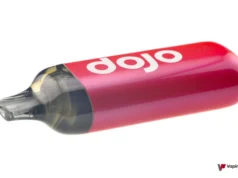
In a video address posted on social media on Saturday, October 17, President Irfaan Ali said that Ashni Singh, the senior minister with responsibility for finance, would sign an order under the Customs Act, Chapter 82:01. According to the Department of Public Information (DPI), the order will prohibit the importation of vapes of all kinds, except those approved by the Minister of Health or the relevant tobacco control authorities.
An order still to be signed
The measure is not yet in force. On October 21, the DPI still described the order as expected to be signed, and no implementation date has been announced. Under the Customs Act, the finance minister is authorised to amend the lists of prohibited and restricted imports, and importing restricted goods requires the approval of the competent authorities.
As announced, the measure only concerns imports, not the sale or use of products already on Guyanese shelves, and nothing has been said about existing stock. Health Minister Frank Anthony, however, told Bloomberg that vapes should be taken out of stores altogether.
Unclear exemptions
The government says the restrictions are primarily aimed at products intended for recreational use. Approval remains possible for medicinal, therapeutic or alternative applications, provided they meet applicable laws, regulations and established medical standards.
According to President Ali, exemptions will be granted by the Minister of Health, the National Tobacco Control Council or the Tobacco Control Board. Neither the approval criteria nor the procedure have been published. The 2017 Tobacco Control Act only provides for a National Tobacco Control Council, which advises the minister; it makes no mention of a Tobacco Control Board. Nor has the government said whether adult smokers using vapes to quit cigarettes would fall under the “alternative applications” it intends to allow.
In his address, the president said the decision followed concerns raised by parents, teachers and religious leaders. He also argued that the absence of complete knowledge about long-term effects should not be mistaken for evidence of safety.
Diverging youth figures
Frank Anthony has given two sets of figures. He told Bloomberg that more than 100,000 children had been screened, with most of the vape users identified being high school students. He also described vaping as a “gateway product.”
Speaking to NCN, the national broadcaster, he cited results from the Ministry of Health’s school screening programme: 32% of approximately 6,000 secondary school students reported vaping. The rate reached 44% of the 1,605 students screened in Region Six, 35% of 1,300 in Region Four and 25% of 900 in Region Three, compared with 16% in Region Seven and 1% in Region Eight.
The methodology behind these figures has not been published. It is not known whether “reported vaping” refers to occasional, regular or lifetime use, nor how the screened students were selected.
A law already in force
Guyana is not starting from scratch. The Tobacco Control Act 2017, passed on July 27, 2017, came into force on December 11, 2017. It covers all “electronic delivery systems”, with or without nicotine.
The law already bans the sale of vaping products to anyone under 18, with mandatory ID checks (section 27), as well as distance sales by telephone, internet or mail (section 30). It prohibits their sale on the premises of schools, health facilities and sports venues (section 34), bans all advertising, promotion and sponsorship (section 19), and applies smoking bans to vaping (section 17). Section 36 also allows the Minister of Health to impose additional sales restrictions.
The difficulty lies in enforcement. At a meeting on student vaping in Region Six in July, a police representative acknowledged that minors caught vaping face little real consequence. In January, the Customs Anti-Narcotics Unit also reported the seizure of THC cartridges packaged to appeal to young people. These products were already illegal under narcotics law.
Businesses want clear rules
The Georgetown Chamber of Commerce and Industry (GCCI) welcomed the announcement. It called for strengthened monitoring at ports of entry, clearly defined importation and exemption procedures, and effective enforcement against unauthorised distribution.
The Guyana Manufacturing and Services Association and the Private Sector Commission also backed the measure. They asked for clear guidelines on import requirements, exemptions and the implementation timeline.
Lessons from elsewhere
The model announced in Georgetown resembles Australia’s. Since March 1, 2024, the import of all vapes into Australia has been prohibited without a licence and permit from the Office of Drug Control. That framework, built around a medical model for access to vapes, has largely failed to curb the illicit market.
The Maldives followed a similar path. Its president first announced a ban on vape imports from November 15, 2024, extended a month later to possession, use and sale. In July 2026, the archipelago halved its taxes on cigarettes, after its customs revenue collapsed.
In Mexico, where the vape ban has long been contested in court, the import and sale ban that took effect in January 2026 has been followed by cartels tightening their grip on the market, according to the Associated Press.
In Guyana, the scope of the measure will depend on the text of the order, and on the criteria that determine which products, and which users, qualify for an exemption.