Beneath the surface
No spectacular shootouts, no stunts designed to ridicule the authorities, no gathering points like Paris’s notorious “crack hill” – and yet synthetic drugs are a growing worry for the authorities.
The latest report from the European Union Drugs Agency (EUDA, formerly the EMCDDA) sounds the alarm over vapable new psychoactive substances (NPS). According to the agency, the health risks linked to these emerging molecules remain largely unknown, but some are already exposing users to severe, sometimes fatal, poisonings.
The report points to a marked rise in the vaping of e-liquids containing synthetic cannabinoids, as well as the growing adulteration of low-THC or CBD products with these same substances, making exposure hard for users to anticipate.
Synthetic cannabinoids have also been behind mass poisoning episodes. From September 2025, Czechia’s Moravian-Silesian region faced a wave of poisonings from a synthetic cannabinoid sold on the black market as a herbal mixture to be smoked: 24 people were poisoned and two men died. In 2026, Czech health authorities also found MDMB-PINACA, a banned synthetic cannabinoid, in products sold in shops as cannabis or CBD.
Last September, three students at a vocational high school in Nord-Pas-de-Calais, northern France, were briefly hospitalised after taking a few puffs on a “doctored” disposable vape supplied by a classmate. At the time of writing, its exact contents were still being analysed.
International concern
In August 2026, Ireland’s Health Service Executive (HSE) reported high-risk cannabinoids – HHC and related semi-synthetic compounds, as well as potent synthetic cannabinoids – in vapes, vape liquids and edibles sold in shops and on the black market, sometimes labelled as CBD. HHC has been a controlled drug in Ireland since March 2026. These products have been linked to severe adverse effects, including episodes of psychosis and hospitalisations. Given how quickly these NPS are emerging, health authorities are calling for more responsive, better-adapted legislation to limit the associated risks.
Two markets need to be distinguished. The first is drugs sold under the counter. Legality is not the question here (we come back to the legal issues below): distribution and consumption follow the patterns of trafficking.
The second market is more specific: it operates in plain sight. This is the market of legal highs. And it calls for a little law.
A little legal chemistry
In France, the absence of an explicit ban on a molecule does not necessarily mean it is legal. Substances classified as narcotics appear on an official list, regularly updated by the French National Agency for Medicines and Health Products Safety (ANSM), but the authorities can also ban entire families of chemical compounds to stop manufacturers from circumventing the law by slightly modifying an already prohibited substance. A molecule unknown to the general public may therefore already fall under a generic classification, even if its trade name does not clearly appear on the lists.
Furthermore, a product not classified as a narcotic may still be subject to other regulations: psychotropic status, rules applying to medicines, consumer product safety, labelling or anti-fraud rules.
But chemistry moves faster than the law: someone who knows the subject can today, as easily as modifying a molecule, create a new one with similar effects that belongs to no family at all.
This grey area is particularly worrying for e-liquids and synthetic cannabinoids, sometimes sold as CBD, as “THC-free” or as a supposedly legal product, when they are in fact clearly psychoactive but not yet classified. Their actual composition may differ from what is advertised, while their legal status changes rapidly with each new ANSM decision.
The vape as a vessel
So why is the vape the vehicle of choice for these drugs? For several reasons, all of them very simple.
The first is that these products mainly target young people. And young people find it easy to get hold of vapes, as we showed in a previous report – and they are familiar with the product.
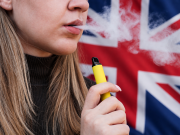
Vaping also has the advantage of being discreet. These products are colourless and odourless, and any authority observing a user would be unable, without lab analysis, to tell what the e-cigarette contains: a legal product, an illegal one, nicotine, a synthetic cannabinoid?
Finally, vapes run on propylene glycol, an ideal solvent for synthetic drugs.
Beyond the risks to public health, there is also a real danger for the image of vaping – genuine vaping, intended for quitting smoking and harm reduction – when what is at stake here is diversion or, to use the proper term, misuse.
Professionals are worried
David Saint-Vincent is a psychologist at Rouen University Hospital and the tobacco and addiction lead of the Fédération Addiction, on whose board he also sits.
He explains:
Indeed, while people in nightclubs, at festivals and in bars are now more or less aware of the drugs that may be slipped into their drinks without their knowledge, few realise that by taking a few puffs on a vape someone hands them, they may unknowingly absorb an even more potent substance.
A national addictovigilance survey, run since 2003 by the Paris addictovigilance centre (CEIP-A) at the request of ANSM, gathers cases reported by healthcare workers, laboratories, forensic medical services, associations and victims. For 2024, ANSM reported 1,377 suspected cases of drug-facilitated assault, 905 possible cases of chemical submission (covert drugging) and 140 likely cases – that is, backed up by the evidence collected. Among these likely cases, sexual assault was mentioned 112 times, or 62.9% of all mentions recorded. Among victims of likely chemical submission, 85.7% were women or girls, with a median age of 24. The survey’s authors nonetheless stress that these are estimates based on known data.
Missing data
For example, the so-called “PTC” molecules (from the French slang “pète ton crâne”, roughly “blow your skull”) could be traced as they arrived. “The first case was detected in western Normandy, then the product spread towards Amiens, Champagne-Ardenne and Île-de-France.”
“This way, we get an idea of how the phenomenon is evolving,” the psychologist explains. “The main concern is that young users take these substances without knowing either their effects or their risks.” Effects and risks that “vary from one producer to another”.
But apart from ending up in the emergency department, what are the risks of these adulterated drugs?
What exactly are these products?
Distribution is also widespread.
A group or a crowd
What drives young people towards drugs? Can the predicted effects of the 2020 lockdown on their mental health, for instance, explain anything?
Nevertheless, the psychologist warns:
One problem, several solutions
Solutions do exist. David Saint-Vincent stresses:
To deter some young people, of course, but also for the hard core who will try anyway.
Today, from addiction specialists to international bodies, everyone acknowledges it: the war on drugs cannot be won. The aim is to stop drugs gaining ground among young people, and to make sure users are still in a condition to be treated when they are ready for it.
As for vaping, it can and must play its part in this fight by refusing to give in to illegality. In its own interest.