A tidal wave of restrictions
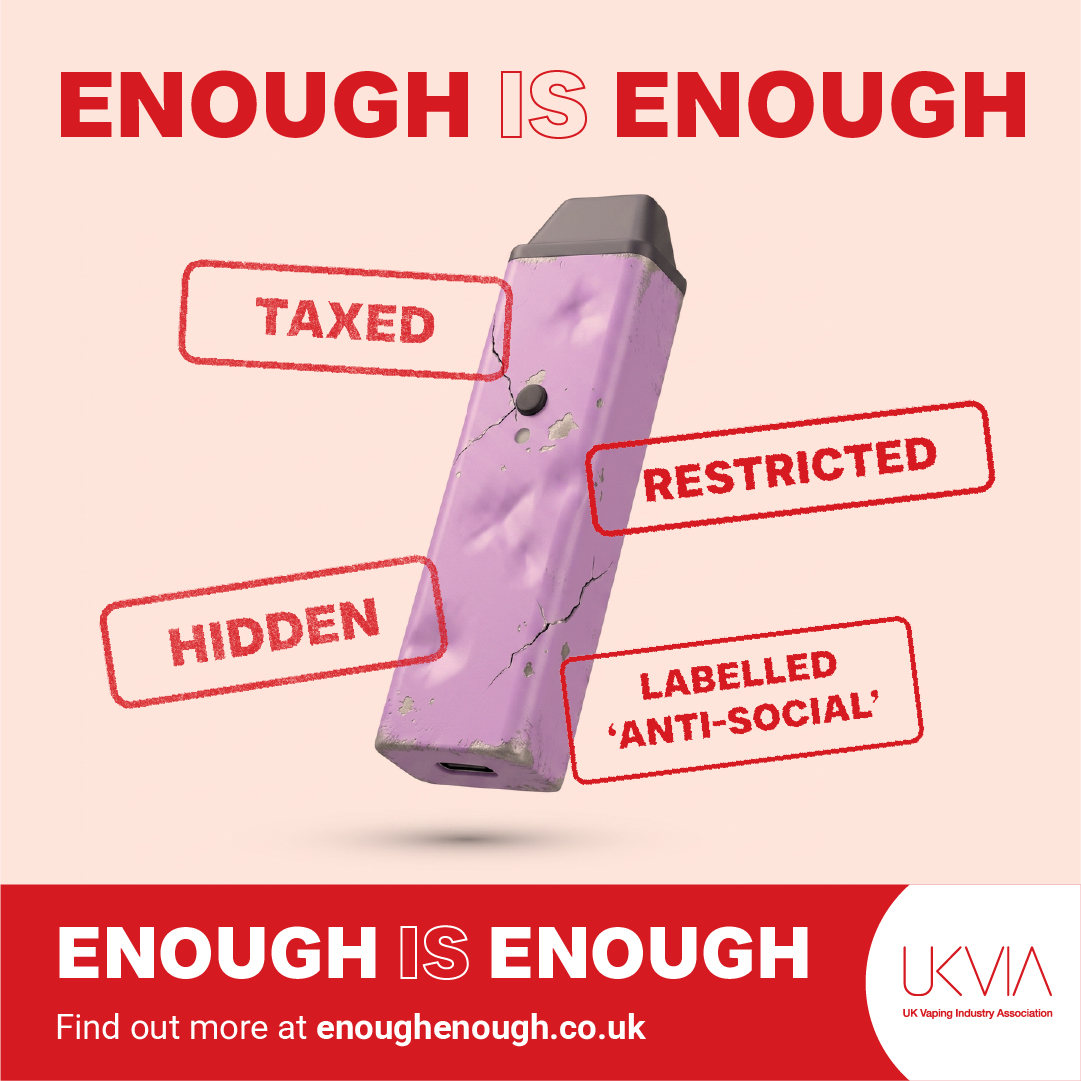 “Enough is Enough” is the name chosen by the UK Vaping Industry Association (UKVIA) for its new campaign, launched this Thursday, September 3, 2026. Its target is the large number of restrictions the government is considering introducing for vaping products, several of which are currently the subject of public consultations.
For the British vaping industry, the change is certainly a dramatic one. For years, the United Kingdom actively promoted e-cigarettes among the country’s smokers. While that promotion continues today, it could soon take place within a much stricter framework. Since the Tobacco and Vapes Act was adopted on April 29, 2026, the government has made clear its intention to regulate the market far more strictly than before. According to the UKVIA, “the cumulative impact of Government policy risks undermining one of the country’s most effective tools for helping smokers quit.”
The measures currently being considered in the United Kingdom include:
- the introduction of plain packaging;
- a ban on e-cigarettes being any color other than white, grey or black;
- restrictions on how flavors can be described;
- and restrictions on how products can be displayed in stores.
At the same time, a ban on advertising and sponsorship for vaping products has already been decided and will take effect on June 1, 2027, while a tax of 22 pence per milliliter (around €0.26/ml) is due to be introduced on October 1, 2026. The Prime Minister has also announced that local councils will soon be allowed to refuse permission for new vape shops to open in town centers, in order to prevent them from replacing other businesses that might be considered more useful to local residents.
Faced with this legislative tidal wave, the UKVIA is calling for a “Fair Deal for Vaping.” Among other things, it is asking the government to launch a major public information campaign to communicate the lower harmfulness of vaping compared with smoking, pointing out that in the United Kingdom, 52% of adult smokers incorrectly believe vaping is as harmful as, or more harmful than, smoking. It also notes that the country is currently estimated to have 5.5 million vapers, including 3.3 million who have now completely quit smoking. The government is also being encouraged to strengthen and expand initiatives such as Swap to Stop, which provide adult smokers with free starter kits to begin vaping.
The association is also calling for the rollout of the licensing system for vape shops to be accelerated, and for their value to the community to be recognized, particularly in supporting adult smokers looking for an alternative to cigarettes.
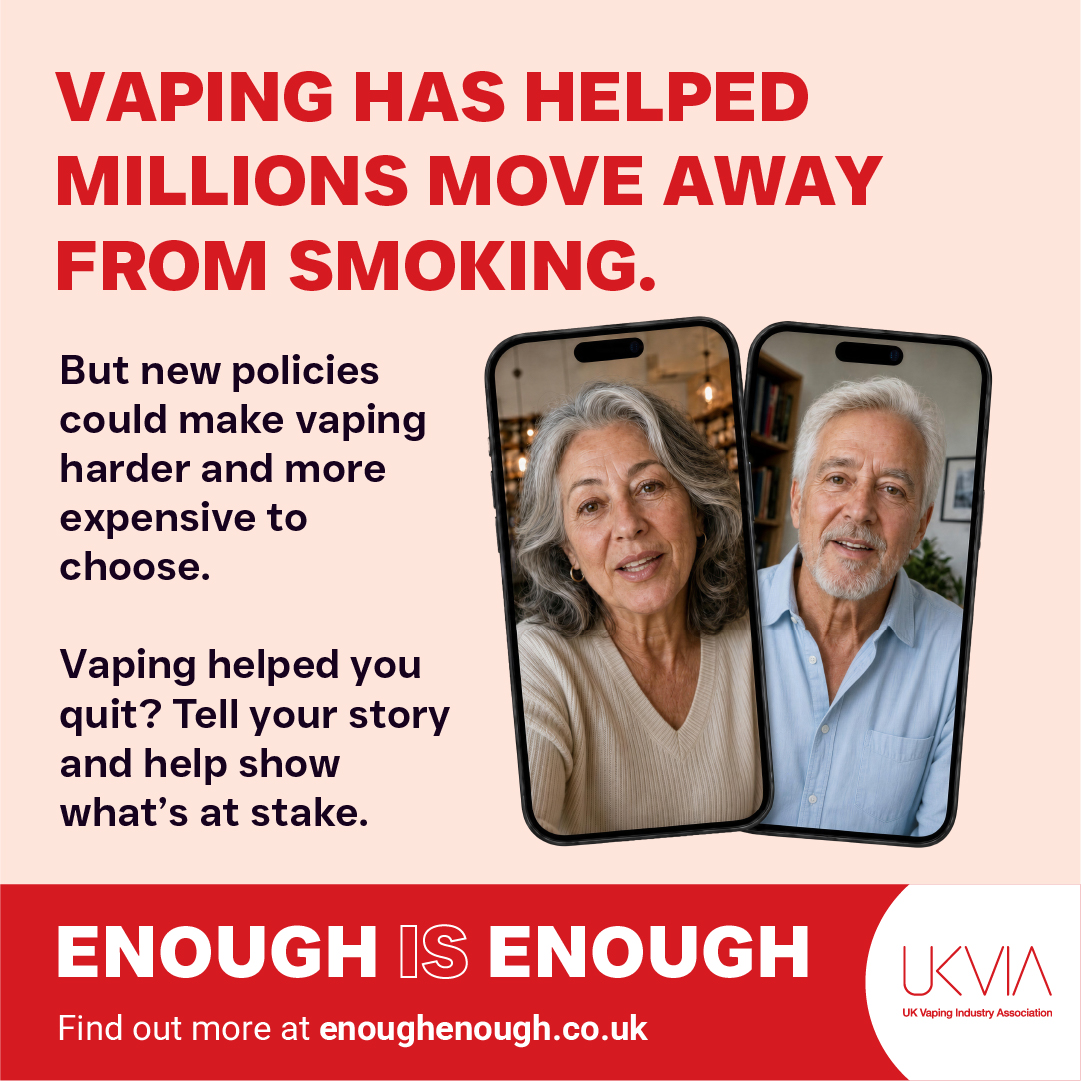
The UKVIA also wants industry professionals to be able to continue communicating with adults by providing “factual and age-appropriate” information through restricted and regulated channels. It adds that while branding elements designed to appeal to children should indeed be removed, this should not mean eliminating “all brand identity” by imposing plain packaging, as is already the case for tobacco products. The requirement to hide products from view in stores and the potential restriction of flavors are also criticized.
Finally, the association is calling for a review of the planned tax on e-liquids, particularly its effects on the price increases it will cause, affordability of vaping products, relapse to smoking, and the illicit market.
“Enough is Enough. Vapers and responsible businesses in the sector understand the need for regulation, and we fully support tough measures to stop children accessing vaping products and to drive unscrupulous traders selling illegal products out of the market. But there comes a point where regulation stops being proportionate and starts undermining the public health objective it is supposed to support.” said John Dunne, Director General of the UKVIA. He also expressed concern that specialist vape shops are increasingly being treated in the same way as some of the unscrupulous retailers against whom the sector has been calling for tougher action for years. “These are not the same actors, and government policy needs to recognize that distinction.” One of the association’s demands is, in fact, for tougher penalties against such retailers.
“Our Fair Deal is not a call for weaker protections for children. It is a call for smarter regulation. Regulation that comes down much harder on illegal traders while ensuring that adult smokers continue to have access to regulated products, accurate information and responsible specialist retailers.” he concluded.