Device access restrictions (DAR), such as age verification built into the device, are not a prerequisite for the authorization of flavored e-cigarettes. That is the position Bret Koplow, named permanent director of the Food and Drug Administration’s (FDA) Center for Tobacco Products (CTP) in September, set out in a letter dated October 26 to the manufacturer Glas, according to the trade publication Nicotine Insider, which reported on the exchange on November 5. The letter answers a September 14 letter from Glas CEO Sean Greenbaum.
A question raised by Vuse Pro
Glas is the only company so far to have obtained FDA authorization for e-cigarettes in flavors other than tobacco and menthol. Its G2 device and a tobacco pod were authorized on March 12, 2026, followed on May 5 by four flavored pods: Classic Menthol, Fresh Menthol, Gold (mango) and Sapphire (blueberry). The G2 requires users to verify their age and identity with a government-issued ID and to pair the device with a smartphone via Bluetooth. It stops working once separated from that phone, and the app runs random biometric checks. We covered that decision when it was announced.
In September, R.J. Reynolds Vapor Company, part of British American Tobacco (BAT), began selling four flavored Vuse Pro pods, Peach, Berry, Watermelon and Fresh Mint, in Ohio and other states, as STAT reported on September 8. None of them has a marketing order. The FDA’s list of authorized e-cigarettes includes the Vuse Alto Power Unit and six tobacco-flavored Alto pods, authorized in July 2024, but no Vuse Pro product.
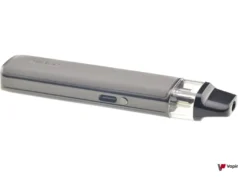
Glas’s objection centers on the device. According to its letter, the new pods are marketed for use with the Vuse Alto, which has no age verification, rather than with the Vuse Pro device, which does. Reynolds’ own U.S. FAQ says Vuse Pro pods are intended for Alto devices, 2Firsts reported. The age-gated Vuse Pro device was submitted to the FDA in 2024 and has not been authorized. For this launch, Reynolds told STAT it relies on ID checks and purchase limits, measures that apply at the point of sale, not in the device.
Greenbaum called this marketing approach “incompatible with FDA’s previously articulated policy” that flavored products require DAR. He cited an August 20 FDA letter which, according to Glas, stated that among the restrictions identified so far, only DAR had shown the potential to significantly change the agency’s assessment of flavored products. If the agency’s position had changed, he wrote, Glas needed to know in order to adjust its business plans.
Koplow’s answer
Koplow replied that the FDA has not changed its position on device access restrictions, and that it still sees age-gating as a potentially important tool to prevent youth use while giving adults access to less harmful products. In his view, these technologies could help make a wider range of adult-appealing flavors available, but they are not the only route.
DAR, he wrote, is one approach within the case-by-case review of premarket tobacco product applications (PMTAs). A flavored product can still be authorized if the manufacturer shows that its benefits for adult smokers outweigh its risks, including youth use. The letter does not say whether Reynolds’ marketing complies with the law. Koplow also encouraged Glas to consult CTP’s Office of Science before submitting supplemental applications for modified versions of its authorized products.
What FDA’s own texts say
The answer matches the FDA’s public documents, which never describe DAR as mandatory. The draft guidance on flavored ENDS applications published in March, which we analyzed at the time, treats DAR as one factor the agency weighs when deciding whether a product is “appropriate for the protection of the public health” (APPH). For the flavors it considers most appealing to youth, it even warns that such technologies may not, on their own, meet the evidentiary bar.
The FDA’s decision summary on the Glas applications explains where Glas’s reading comes from. CTP concluded there that advertising, promotion and sales restrictions cannot sufficiently reduce youth risk from flavored products, and that only the most stringent measures, such as DAR, can. Because of the G2’s access restrictions, the four flavored pods did not have to show an added benefit for adult smokers over tobacco-flavored products.
In other words, DAR gave Glas a way around the usual requirement. Without it, manufacturers remain bound by the standard path: demonstrating that a flavored product helps adult smokers switch better than a tobacco-flavored one, generally through a randomized controlled trial or a longitudinal cohort study. That comparative standard is itself under legal pressure, after the Fifth Circuit ruled in August that the FDA had to adopt it through formal rulemaking, and the agency now plans to replace its 2021 PMTA rule.
Authorization is one thing, enforcement another
Koplow’s letter separates the standard for obtaining authorization from the FDA’s enforcement priorities toward products still awaiting a decision. Under its May 8 enforcement guidance, the agency generally does not intend to prioritize enforcement against unauthorized e-cigarettes whose applications have been accepted and filed, or whose supplemental applications have been accepted and pending for more than 180 days. For non-tobacco-flavored products, the FDA must also have determined that the application contains the data needed to assess whether the product meets the APPH standard.
The agency can still act against products with features it considers presumptively appealing to minors, such as cartoon characters or designs resembling toys, phones or gaming devices, and against those raising safety concerns, such as high nicotine content or missing child-resistant packaging. The guidance stresses that benefiting from this policy says nothing about a product’s chances of authorization.
Public records do not show whether the Vuse Pro pods meet these conditions. Reynolds told STAT that their sale is consistent with applicable state regulations. The guidance itself is being challenged in federal court by public health groups, while several manufacturers are seeking to intervene in its defense.
No change for Glas
Asked whether Koplow’s response contradicted the agency’s earlier communications on age-gating, Greenbaum told Nicotine Insider that it was consistent, and that it would not change Glas’s product development plans. According to the company, the FDA has accepted additional product supplements Glas submitted since its March and May orders.