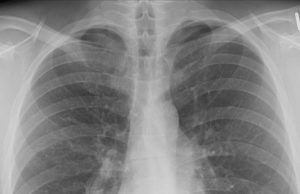
- The study compares 17 vapers, 19 smokers and 22 non-users aged around 26, over a single week.
- Vapers and smokers had poorer vascular function than non-users, but the study cannot say whether vaping is the cause.
- Four British researchers consider its conclusions overstated: groups too small and poorly matched, past smoking not properly ruled out, indirect markers.
- Some of the authors had already signed a study concluding that vaping was no better than smoking, announced to the press as early as 2024.
- Studies that follow smokers who switch to vaping show, on the contrary, an improvement in vascular function.
What the study says
The study, published on 21 October 2026 in JAMA Cardiology, was led by Maxime Boidin of the Institute of Sport at Manchester Metropolitan University between July 2023 and April 2025. It involved 58 adults aged 18 to 45 with no known cardiovascular disease or major risk factor, divided into three groups: 17 vapers who had smoked fewer than 100 cigarettes in their lifetime, 19 smokers of at least five cigarettes a day, and 22 people who used neither.
All participants visited the laboratory twice within the same week. A first test measured the ability of the arm artery to dilate after compression (“flow-mediated dilation”, or FMD), and a second measured how the carotid artery reacts when a hand is plunged into ice-cold water. These were complemented by an exercise test on a bike and spirometry (a breathing test).
| Measure | Non-users (22) | Vapers (17) | Smokers (19) |
|---|---|---|---|
| Arm artery dilation (FMD) | 8.3% | 5.5% | 4.4% |
| Carotid artery reactivity | 4.7% | 0.6% | -1.4% |
| Source: Boidin et al., JAMA Cardiology, 2026. Mean values. The higher the value, the better the vascular function. | |||
As the table above shows, vapers and smokers scored worse on vascular measures than non-users, with no significant difference between them. During exercise, ventilation and cardiac output were lower in both groups. Peak oxygen uptake, the benchmark measure of physical fitness, was lower in vapers than in non-users. In smokers, however, the difference was not significant. According to the authors, lung function and physical activity levels did not differ significantly between the three groups.
Based on these data, the authors concluded that daily vaping is “associated” with poorer vascular function and poorer fitness, and called for longitudinal studies to assess the long-term consequences. They also suggest that their results challenge the idea that vaping reduces cardiovascular risk compared with smoking. Yet the authors themselves acknowledge that their study cannot establish that vaping causes cardiovascular damage.
Too little to conclude
All scientific studies have limitations, but those of this research make the researchers’ conclusions particularly fragile.
The first limitation is the number of participants. With 17 vapers and 19 smokers, the study lacks the statistical power needed to compare the two groups. Yet this is precisely the comparison the authors rely on to question the risk reduction offered by e-cigarettes compared with smoking.
This comment comes from Harry Tattan-Birch, a UCL researcher and one of the four experts consulted by the Science Media Centre. In his view, this small study draws conclusions that its design cannot support. Seeing it as a challenge to vaping as a less harmful alternative for the heart would be a “serious overinterpretation”.
The second limitation lies in its method: as a cross-sectional study, it only offers a “snapshot” at a given moment. No one knows what state these young people’s blood vessels were in before they started vaping or smoking. Lion Shahab, professor of health psychology at UCL, also points out that participants were self-selected volunteers from Manchester universities. And according to him, in groups this small, a single individual with an unusual response can substantially influence the results.
Tobacco lying in wait
In their conclusion, the authors also refer to young adults who have “never smoked”. The criterion used, fewer than 100 cigarettes in a lifetime, is admittedly the standard definition of a never-smoker in epidemiology. But it leaves room for a past as an occasional smoker, and Katie East, associate professor in public health at Brighton and Sussex Medical School, sees it as a major bias.
Nor are the groups comparable in their consumption habits. To take part, vaping at least five days a week was enough, whereas smokers had to be established daily smokers who had not vaped in the past three months. For Katie East, these criteria contradict the authors’ conclusion about “daily” vaping among young people who have “never smoked”.
Peter Hajek, professor at Queen Mary University of London, who also criticised the study, puts forward another explanation: lifestyle. In his view, it is to be expected that smokers and vapers are less fit, and that their vascular results follow suit. He notes that physical inactivity and lower fitness often predate the onset of substance use. And one detail of the results supports him: smokers’ fitness did not differ significantly from that of non-users, whereas vapers’ did. An effect of the product would hardly explain this, since tobacco is far more toxic.
Finally, on physical activity, the authors found no significant difference between the groups. Lion Shahab nevertheless notes that non-users reported substantially higher activity levels than the others. With groups of fewer than 25 people, the absence of a significant difference does not prove equivalence, the very argument the authors ignore in their comparison between vapers and smokers. Lion Shahab adds that medication use and body composition were not adequately accounted for in key comparisons.
The researcher also points to some oddities: one participant classified as a non-user tested positive for cotinine, a nicotine marker, and was not excluded from the study. Even more surprisingly, smokers had the most favourable cholesterol profile of the three groups, even though smoking is known to lower “good” cholesterol and raise triglycerides. For Lion Shahab, this is further evidence that such small groups of volunteers are difficult to compare.
Markers, not diseases
No disease was measured in this study. FMD and carotid reactivity are merely intermediate markers that may be associated with cardiovascular risk in older populations.
And for Shahab, the ability of these markers to predict future cardiovascular problems in healthy individuals is limited or not well established. For Peter Hajek, the problem also lies in the communication: the authors acknowledge that the study cannot establish causality, but their press release hints at harms of vaping, something their study did not show.
Maxime Boidin makes no secret of the fact that he knew what he would find. Interviewed by the specialist website TCTMD, he explained that the question was not whether vaping would cause issues, but rather how harmful it would be.
Yet when researchers follow participants over time, using the same marker as in this study, the results are very different. In the VESUVIUS trial at the University of Dundee, for example, 114 smokers were followed for one month. Those who switched to e-cigarettes saw their FMD improve, with or without nicotine. Maxime Boidin himself acknowledged this to TCTMD. This is also the kind of research Harry Tattan-Birch refers to: in his view, the Manchester study does not overturn the broader evidence that switching from smoking to vaping likely substantially reduces cardiovascular harm.
Repeat offenders
This is not the first time this team has made headlines on vaping. In September 2024, Azmy Faisal, a researcher at the same Institute of Sport, presented results on 60 young people at the European Respiratory Society congress: 20 vapers, 20 smokers and 20 non-users. At the time it was only a conference abstract, not peer-reviewed, and its conclusion was already settled.
As so often, part of the press followed without question. The Guardian ran the headline “Vaping damages young people’s lungs as much as smoking, study suggests”. It is worth remembering that all participants in this study had normal lung function.
In February 2025, it was Maxime Boidin’s turn. Before his research was even completed, he opened his laboratory to the Daily Mirror, which ran the headline “Vaping horror as first ever study reveals deadly side effects – heart disease, organ failure, dementia”. We pointed out at the time how unusual this approach was.
Tobacco policy specialist Clive Bates then sent him an open letter, copied to the university’s management, accusing him of irresponsible publicity based on unpublished data.
In July 2026, Azmy Faisal’s team finally published its work in ERJ Open Research, this time on 75 people, partly reusing the data presented in 2024. The university’s press release announced a fitness reduction of around 15% in both vapers and smokers, and presented the study as support for the UK’s Tobacco and Vapes Act, prompting alarmist headlines that once again ignored the wider evidence.
And these two studies are not independent. Rehan Junejo, who performed all the FMD measurements in Azmy Faisal’s study, and Hans Degens, who reviewed its manuscript, are among the authors of Maxime Boidin’s study. Both studies share the same funder, the Manchester Academic Health Science Centre and Health Innovation Manchester. They also share the same design: a few dozen volunteers, examined over a single week, and in both cases the conclusion was announced to the press before any peer-reviewed publication.
One difference is also worth noting. In the ERJ Open Research study, no vaper could ever have smoked. In the JAMA Cardiology study, a history of up to 99 cigarettes was allowed.
A lead, not proof
The JAMA Cardiology study is not without interest. It suggests that young people who vape without having really smoked show poorer vascular markers than non-users. That is reason enough to say, as the experts who criticise it also do, that a non-smoker has no reason to take up vaping.
But no conclusion about the cardiovascular health of millions of vapers can be drawn from 17 people examined over a single week. Even less about the value of vaping for a smoker who wants to quit, a population the study did not even examine. Lion Shahab sums it up well: this is simply an exploratory study, which raises questions rather than provides firm answers. Answering them will require much larger studies following participants over time, including those who start or stop vaping or smoking. Until then, it is best to read this kind of study with the pitfalls of vaping research in mind, rather than stopping at their headlines or the way the media pick them up.