The Asia-Pacific region sits at the centre of the global smoking epidemic. Home to the majority of the world’s smokers, it also bears a disproportionate share of the roughly eight million deaths caused by tobacco use each year. Combustible cigarettes remain the single most lethal consumer product in widespread legal use, killing a large proportion of long-term users. Yet at the same time, an expanding body of scientific evidence shows that non-combustible nicotine alternatives—such as vaping devices, heated tobacco products, and oral nicotine—can dramatically reduce harm for people who would otherwise continue smoking.
For a tobacco harm reduction (THR) audience, the tragedy is not a lack of evidence but a failure of policy. Across much of Asia, governments continue to pursue prohibitionist approaches that restrict or ban safer alternatives, often under pressure from international health bodies and advocacy groups. The result is a set of policies that preserve cigarette dominance, fuel illicit markets, and undermine public health goals.
Why is the fact that cigarettes are the real problem ignored?
The science is clear: nicotine itself is not the primary cause of smoking-related disease. Cancer, cardiovascular disease, and chronic respiratory illness are driven by the toxic by-products of combustion—tar, carbon monoxide, and thousands of harmful chemicals produced when tobacco is burned. For smokers who cannot or do not want to quit nicotine entirely, switching to non-combustible products can reduce exposure to these toxins by a large margin when products are properly regulated.
Countries in the region which have acknowledged the risk continuum, namely Japan and New Zealand, have obtained positive results supporting their strategies. Japan’s experience with heated tobacco products has coincided with one of the steepest declines in cigarette sales ever recorded in a major market.
Reviews by Public Health England (now the UK Health Security Agency) and the Royal College of Physicians conclude that vaping is substantially less harmful than smoking. In Europe, Sweden’s long acceptance of snus has helped push smoking rates to the lowest worldwide, alongside correspondingly low rates of smoking-related disease. These outcomes are not theoretical, they are measurable, population-level results.
Intentions versus outcomes
Despite this evidence, several Asian governments have moved in the opposite direction. Vietnam introduced a comprehensive ban on reduced-risk products in 2025 and later tightened restrictions. Bangladesh followed with similar measures. In Thailand and India, outright bans have been in place for years. Malaysia and the Philippines are considering heavy taxation and strict product limits that risk making safer alternatives less accessible than cigarettes themselves.
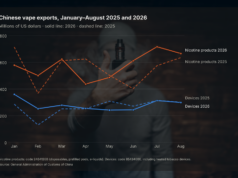
India offers a particularly stark example. The Prohibition of Electronic Cigarettes Act, 2019 outlawed the manufacture, import, and sale of vapes, yet enforcement gaps have allowed a thriving black market to develop. Devices, mostly smuggled from China, are readily available in major cities, online platforms, and even local shops. Data from the Directorate of Revenue Intelligence show a sharp rise in seizures over recent years, reflecting not declining demand, but expanding illicit trade.
Public health experts have warned that this underground market increases risks, particularly for young people. With no regulatory oversight, products may be adulterated, poorly manufactured, or mislabelled. Concerns have been raised about devices containing unknown additives or even narcotics, risks that are far greater than those associated with regulated nicotine vaping products.
At the same time, India continues to allow the legal sale of cigarettes, bidis, and smokeless tobacco, products responsible for enormous disease burdens and significant healthcare costs. Critics argue that the ban has become symbolic rather than effective, sustaining a multibillion-dollar shadow economy while doing little to reduce smoking.
Will Pakistan follow suit?
Meanwhile ignoring these data, its neighbour to the North: Pakistan, is now moving toward comprehensive controls on vaping products. A senate committee has endorsed new legislation which on paper includes familiar elements: an age-of-sale limit of 18, restrictions on sales near schools, bans on advertising, product standards, and penalties for smuggling.
Yet, from a harm reduction perspective, the details matter. Treating vaping exactly like combustible tobacco, including blanket advertising bans and public-use restrictions risks sending a message that all nicotine products are equally harmful. Evidence from multiple countries suggests that over-restrictive frameworks reduce switching from cigarettes, especially among lower-income smokers who are most affected by tobacco-related disease. If regulation focuses narrowly on youth visibility while failing to ensure adult access to affordable, appealing alternatives, Pakistan may replicate the same mistakes seen elsewhere in the region.
Ultimately failing smokers who need help quitting
The reluctance to embrace THR in Asia is often framed as precautionary, but critics argue it reflects an ideological resistance to nicotine rather than a science-based assessment of risk. Harm reduction principles are widely accepted in other areas of drug policy—needle exchange programs, opioid substitution therapy, and supervised consumption sites—but are frequently rejected when applied to tobacco.
Reports from organisations such as Knowledge-Action-Change and the Global State of Tobacco Harm Reduction consistently show that countries embracing proportionate regulation achieve faster declines in smoking than those pursuing prohibition. Conversely, bans correlate with persistent smoking rates and growing illicit trade. With millions of smoking-related deaths each year—most of them in Asia—the consequences of these policy choices are profound. Every year of delay in allowing safer alternatives translates into preventable disease and death.
High Smoking Rates Are Evidence of Policy Failure, Not Progress
The central policy question facing the Asia-Pacific region is no longer whether safer nicotine products should exist, but whether governments are willing to regulate them realistically. Effective frameworks prioritise product standards, age enforcement, accurate risk communication, and differential taxation that reflects relative harm.
Prohibition has not eliminated demand for nicotine; it has simply ensured that the most dangerous form, combustible cigarettes, remains dominant. For a region carrying the heaviest burden of smoking-related harm, embracing tobacco harm reduction is not a concession to industry or ideology. It is a public health imperative.
How Cultural Frames Shape Tobacco Harm Reduction (or Lack Of) in Asia