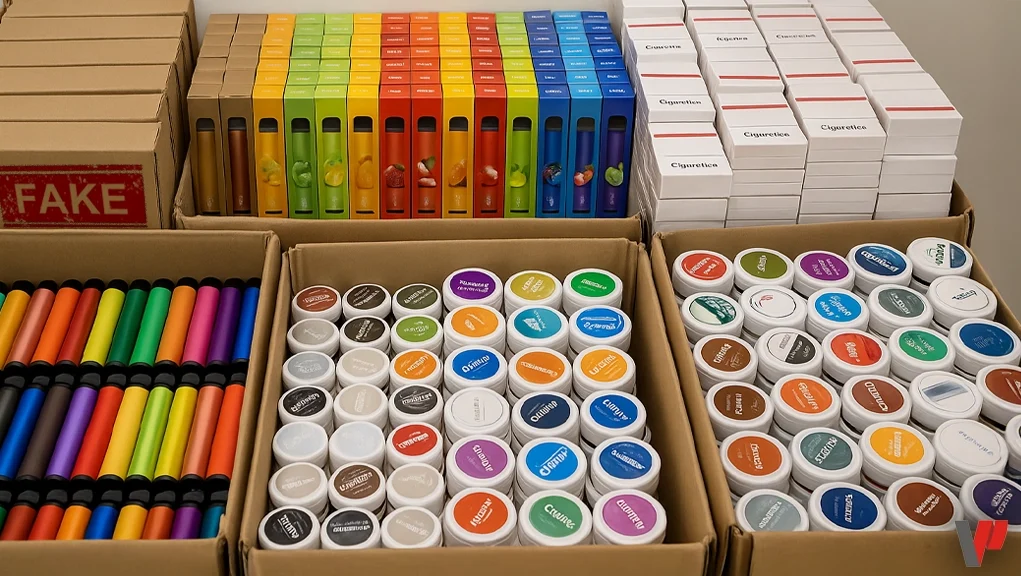
Australia’s tobacco-control model has reached an uncomfortable turning point. Daily smoking has (allegedly) fallen to a record low, yet the country’s legal nicotine market has simultaneously been overwhelmed by illicit cigarettes and vapes, generating billions in criminal revenue and weakening the government’s control over product safety, age restrictions and taxation.
This apparent contradiction should prompt a serious policy reassessment. Australia does not need to abandon successful tobacco-control measures, but it can no longer assume that ever-higher cigarette taxes and tightly restricted access to vaping will continue producing better public-health outcomes.
The priority should remain reducing the more than 24,000 deaths attributed to smoking annually. Achieving that requires policies that make combustible cigarettes less attractive while ensuring satisfying, substantially lower-risk alternatives are easier—not harder—for adults to obtain legally.
Are Australia’s smoking rates really declining?
The same survey found that 34% of people who smoke had recently purchased or currently used illicit tobacco—approximately double the 2022–23 proportion. And self-reported surveys tend to struggle to capture illegal purchasing accurately, particularly when consumers are reluctant to disclose it; therefore, these figures are likely higher.
Australian Bureau of Statistics modelling presents an even more troubling picture. It estimates that nicotine consumption increased by almost 40% between 2017 and 2025, while population growth was only 14%. This would not even be considered that disastrous from a tobacco harm reduction standpoint, if it weren’t for the fact that the illicit share of tobacco and nicotine consumption reportedly rose from around 12% to 80% over the same period.
These figures reflect different aspects and shouldn’t be seen as directly interchangeable. The household survey indicates that fewer people are smoking every day, with overall self-reported nicotine use on the decline. Meanwhile, the ABS analysis looks at the total volume consumed, even accounting for products that are off the legal market. When considered together, they imply that Australia might be reducing smoking rates but is losing grip on how those who still smoke or use nicotine are sourcing it.
How price differences affect consumer behaviours
For decades, Australia’s cigarette excise has played a key role in discouraging smoking. However, taxation doesn’t function in a vacuum. When legal prices drift significantly apart from illicit ones, it can create a financial motivation to avoid tax rather than to quit smoking altogether.
Australian tobacco harm reduction expert Alan Gor recently discussed qualitative research led by Cheneal Puljević that found that consumers commonly described price as their principal reason for buying illicit tobacco. Cheap cigarettes had become readily available, increasingly normalised and widely regarded as an acceptable response to legal prices many considered unaffordable.
Moreover, added Gor, criminologist James Martin’s March 2025 survey of 4,000 recent nicotine consumers reached a similar conclusion from a different direction. Nearly half of manufactured-cigarette purchasers and more than 60% of roll-your-own consumers reported buying illicit products, while the estimated illicit proportion among people who vape reached 95.7%. Martin estimated illicit nicotine spending at around A$7.7 billion annually. These figures derive from research presentations and survey estimates rather than official market accounts, but they reinforce the scale of the problem described in subsequent academic analysis.
A peer-reviewed commentary in Addiction likewise concluded that at least half of cigarettes and most vapes purchased in Australia now come from the illicit market. The resulting criminal activity is not a minor tax-compliance problem. Illegal tobacco distribution has been linked to extortion, store firebombings and violent competition between organised groups. Enforcement remains essential, but raids and seizures do not address the economic incentives continuously regenerating the market.
Ridiculous fact: legal vaping is less accessible than smoking
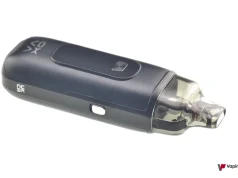
Meanwhile, the clearest policy contradiction concerns vaping. Adults can purchase cigarettes from ordinary retailers almost everywhere. Therapeutic vapes, by contrast, may generally be supplied only through participating pharmacies. Since October 2024, adults have been able to buy qualifying products containing no more than 20mg/ml of nicotine without a prescription, but only after consulting a pharmacist and subject to state rules.
This is less restrictive than the former prescription-only model, but it still does not resemble a competitive consumer market. Product presentation, flavours, nicotine strengths and retail availability remain tightly controlled. Many pharmacies do not participate, while illegal retailers supply the products consumers already prefer.
Martin’s research suggests the pharmacy pathway serves only a small fraction of Australia’s estimated 1.5 million people who vape. His central criticism is difficult to dispute: a legal market does not function merely because products are technically obtainable. It must be accessible, affordable and acceptable enough to compete with both cigarettes and illicit vapes.
When regulated products fall short of meeting demand, the market doesn’t just disappear. Instead, it shifts to informal sellers, social networks, websites, and even organised crime suppliers. While closing down visible stores might create temporary access issues, it often drives transactions into channels that are harder to monitor. Permitting adults to access vaping products doesn’t mean supporting unrestricted sales.
Reform should change the market’s incentives
Australia cannot arrest its way out of a consumer market serving millions of people. Enforcement should target organised crime and openly non-compliant businesses, but it must operate alongside a regulatory structure consumers are willing to use.
A credible reform package would permit licensed specialist retailers and pharmacies to sell compliant vapes to adults, allow a sufficiently varied range of flavours and nicotine strengths to compete with illicit products, and establish national product and retail standards.
The government should also independently review tobacco excise rather than automatically continuing increases. A reduction would be politically contentious and must be assessed carefully, since cigarette taxes remain an effective smoking deterrent. Yet pausing or recalibrating future increases may be justified if the current price differential is demonstrably expanding criminal supply faster than it encourages quitting.
What actually constitutes success?
Australia should measure success through more than legal sales or survey smoking rates. Relevant indicators include cigarette consumption, complete switching to lower-risk products, illegal-market share, youth access, criminal violence, product safety and tax revenue.
The country has made the most dangerous nicotine product universally available, while forcing a substantially safer substitute through a narrow retail channel that most consumers avoid. Organised crime has filled the space between demand and legal supply.
Australia’s illicit nicotine crisis will not be solved by choosing between public health and enforcement. The more durable solution is to redesign the legal market so that fewer adults need or want to buy from criminals. Safer products should be easier to obtain than cigarettes. That is not surrendering to the black market—it is how Australia can begin shrinking it.
Australia Insists on Opting for Nicotine Prohibition, Despite Failing Miserably