As smoking rates continue to fall unevenly across the world, public health authorities are once again reassessing how nicotine should be regulated. In the United States and Europe, attention is shifting away from vapes toward oral nicotine pouches, tobacco free products that deliver nicotine without combustion, smoke, or vapour. For tobacco harm reduction experts, the central question is no longer whether these products are safer than cigarettes, but whether regulators can avoid repeating past mistakes by managing risks proportionately rather than defaulting to restriction and prohibition.
This debate is of course shaped by the legacy of vaping. Any early optimism that e-cigarettes would help adults quit smoking was ultimately overshadowed by youth uptake, aggressive marketing, and regulatory missteps. As a result, policymakers now approach nicotine pouches with caution, even as scientific consensus continues to affirm that the overwhelming harm from smoking comes from inhaling toxic combustion products, not from nicotine itself.
Signals from US regulators
In late 2025, the U.S. Food and Drug Administration authorised several nicotine pouch products under a pilot programme designed to accelerate reviews for this emerging category. These decisions followed earlier authorisations for products from Zyn, currently the most widely used nicotine pouch brand in the United States, as well as approvals for Altria’s on! PLUS range.
The FDA framed these authorisations explicitly within a harm reduction context. The agency stated that its aim was to provide adult smokers with access to less harmful alternatives while continuing to monitor risks to non users and adolescents. This position marks a notable shift from the more defensive posture adopted during the peak of the vaping controversy.
Nicotine pouches differ fundamentally from combustible cigarettes, as well as other nicotine tobacco and/or nicotine alternatives. Their nicotine delivery method eliminates exposure to tar, carbon monoxide, and thousands of toxic byproducts created by burning tobacco. While nicotine pouches are addictive and not risk free, many researchers consider their overall risk profile closer to nicotine replacement therapies such as gum or lozenges than to smoked tobacco.
Most pouch users are trying to quit smoking
Population level data indicate that nicotine pouch use remains concentrated among current or former users of cigarettes, vaping products, or smokeless tobacco. Overall prevalence remains relatively low, though growth has been rapid among younger adults, particularly men.
A March 2025 consumer survey from Spain illustrates how these products are being used in practice. The study, conducted by the Tholos Foundation with research support from Dynata, surveyed 515 adult nicotine pouch users. Nearly two thirds reported adopting pouches specifically to quit smoking, while most opposed proposed regulations that would severely restrict nicotine strength or ban non-tobacco flavours.
The findings also highlighted the risks of overly restrictive policy. Around one third of respondents said they would seek products through illicit markets if such rules were enacted, while a similar share said they would likely return to cigarettes. For harm reduction advocates, this echoes patterns seen with vaping restrictions in several countries, where demand did not disappear but instead shifted into unregulated channels.
Have youth uptake fears taken over?
At the same time, evidence from Great Britain underscores why regulators remain wary. A Deltapoll survey of 500 teenagers across England, Scotland, and Wales found that around 13 percent of 14 to 17 year olds had tried nicotine pouches, with nearly one in three of those using them weekly. Most reported obtaining the products through friends or retail outlets, reflecting gaps in age restrictions rather than formal marketing channels.
Teen respondents themselves largely supported stronger regulation. The survey found broad backing for the UK government’s Tobacco and Vapes Bill, including age limits, flavour restrictions, limits on nicotine strength, and tighter advertising controls. Exposure to nicotine pouch promotion, particularly in shops and online, was widespread and frequently cited as a concern.
This evidence highlights the central challenge facing regulators – how to preserve access for adult smokers seeking safer alternatives while preventing youth uptake that could trigger political backlash and blunt public health gains.
A competing narrative
No discussion of nicotine pouches is complete without Sweden. The country has the lowest smoking rate in Europe and has effectively reached the World Health Organization’s benchmark for a smoke free society, with daily smoking below five percent across multiple age cohorts.
According to the Public Health Agency of Sweden, daily smoking among people aged 16 to 29 declined sharply between 2015 and 2024, while use of snus and nicotine pouches increased over the same period. This pattern is often described as a “gateway out” of smoking rather than a gateway into nicotine use.
Ending the taboo around oral lesions is a public health necessity
Gingival recession, which represents irreversible gum damage, has been observed in a smaller but clinically significant minority. More specificically, 18% in a 2023 Norwegian study with 18-20 year olds, 39% among pouch using dentists in a 2025 study investigating nicotine pouches with an integrated barrier, and 54-57% among participants in a 2022 Swedish Match study. Given the clinically proven, very high occurrence of oral lesions due to pouch use, it is ridiculous that information about lesions is is rarely made available by manufacturers.
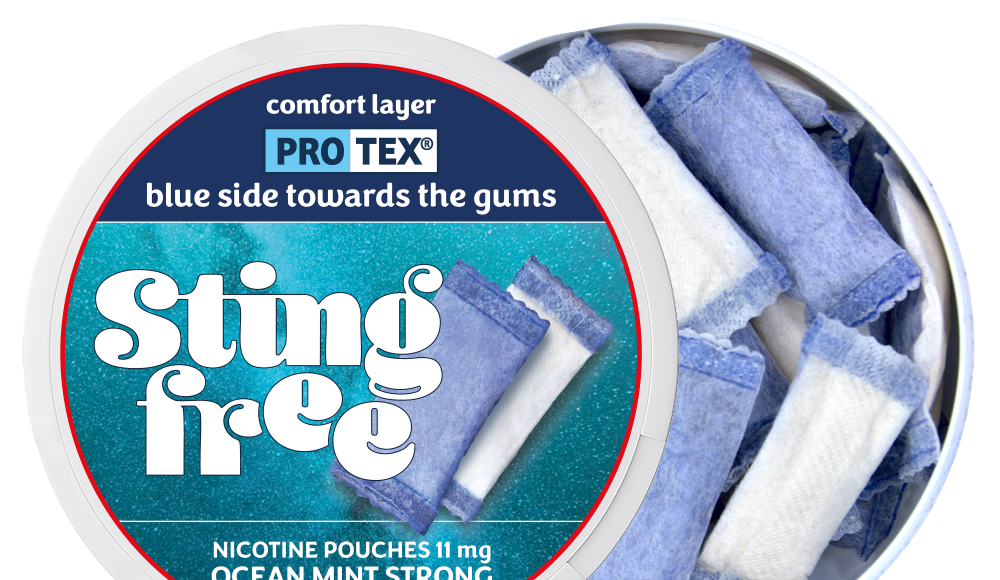
Bengt Wiberg, founder of Swedish nicotine pouches’ brand Stingfree AB, has been outspoken about the need to address these risks transparently rather than dismiss them. Speaking in a recent interview on 2 Firsts, Wiberg said that while nicotine pouches are clearly far less harmful than smoking, oral irritation should not be treated as an inevitable cost of harm reduction.
“Oral irritation and lesions should not be accepted as an inevitable price of switching from cigarettes,” Wiberg said. “If we can remove local tissue irritation through better product design, we remove one of the final barriers to global harm reduction.”
Details which matter
Wiberg emphasised the importance of distinguishing between reversible mucosal lesions and irreversible gingival recession. He also pointed to long term Swedish cohort research, including a Karolinska Institute study of more than 400,000 men followed for 30 years, which found no increased risk of oral cancer associated with traditional snus use as compared to never-snus users. In his view, conflating local irritation with cancer risk has distorted public debate.
He added, that more often than not what a consumer sees in the bathroom mirror when flossing or brushing their teeth, is perhaps more on their mind than the more abstract relative risk of smoking compared to nicotine pouch use. “While we await more formal clinical data, my frequent interactions with the oral nicotine community lead me to believe that for most users, what they see in the mirror every morning matters more than abstract health statistics. For someone who quit smoking years ago, the long-term benefit of avoiding cigarettes is a ‘solved’ problem, but the visible gum irritation they face today is a very real, immediate concern. It describes a well-known phenomenon in medical psychology called Salience bias, i.e. humans are hard-wired to focus on immediate, visible rather than delayed, invisible benefits.”
Innovation as Harm Reduction in Practice
Wiberg’s own work has focused on reducing oral irritation through product design rather than regulation alone. A 2025 peer reviewed study published in Acta Odontologica Scandinavica examined his product, a nicotine pouch incorporating a physical barrier layer designed to limit direct contact between pouch contents and the gums. Conducted among Swedish dentists, the study found a marked reduction in moderate to severe oral lesions over a five week period, with no participants experiencing worsening conditions. The reduction in lesion severity (>50%) was statistically significant at a 99.98% level (p=0.0002).
According to Wiberg, the findings demonstrate that harm reduction is not static. “The study shows that local irritation is not inevitable,” he said. “It is something that can be solved with better engineering.”
He was careful to stress that such innovations do not eliminate all risks, particularly irreversible gum recession, but argued that continuous improvement should be encouraged rather than penalised or ignored. In his view, suppressing safer products because they are imperfect risks preserving the far greater harms of smoking.
A Policy Crossroads
Across jurisdictions, regulators are now weighing whether nicotine pouches should be allowed to carry reduced risk claims, how to enforce age restrictions effectively, and how to prevent illicit markets from filling regulatory voids. Evidence from Spain, Sweden, the United Kingdom, and the United States suggests that adult smokers increasingly understand relative risk and are willing to switch when credible alternatives remain accessible.
The core lesson emerging from this growing body of evidence is straightforward. Eliminating combustion delivers the largest health gains. Nicotine pouches are not risk free, but they are not remotely comparable to cigarettes in terms of harm.
As policymakers reassess nicotine regulation, the challenge is not choosing between protection and progress, but designing frameworks that achieve both. When harm reduction is treated as an evolving process grounded in science, innovation, and transparency, it becomes a powerful tool for reducing smoking related disease rather than a threat to public health. In that sense, the debate over nicotine pouches is less about repeating past mistakes and more about whether regulators are prepared to learn from them.
Proof and Prejudice: The Science Policymakers Are Ignoring About Vapes and Nicotine Pouches